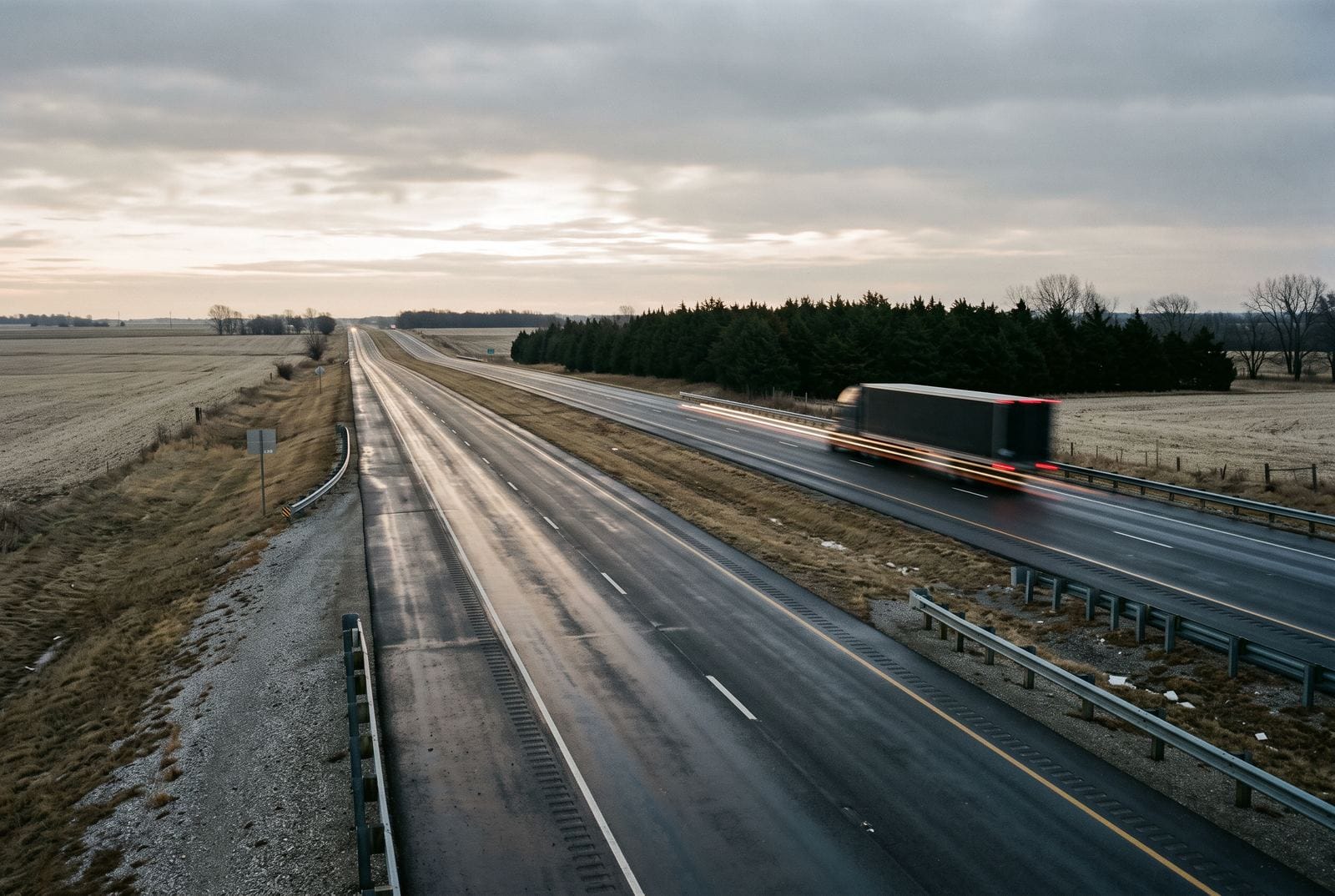
Truck and Tractor-Trailer Accident Lawyers
A trucking case is not a bigger car accident. There is a motor carrier, a driver, sometimes a broker and a shipper, and a set of federal regulations governing hours, maintenance, inspection and hiring that a passenger-car case has no equivalent for. There is also a spoliation clock: logs, telematics and dashcam footage are routinely overwritten within weeks. We send preservation letters the day we open a trucking file, and we treat the maintenance and hiring records as the case, not as background.
What we do on these cases
- A preservation letter goes out the day the file opens, naming the specific records that get overwritten first: electronic logging data, engine control module downloads, dashcam and forward-facing footage, dispatch messages, and the driver qualification file.
- We identify every party before we identify a theory. The driver, the motor carrier, the trailer owner, the broker who arranged the load and the shipper who loaded it can all be separate companies with separate policies, and a case built against one of them is a case that has left the rest of the coverage on the table.
- We read the maintenance file and the inspection history as the primary evidence rather than as context. A defect that failed an inspection weeks before a crash, with no repair recorded, is a different case from a momentary lapse of attention.
- We work out venue early, because Georgia gives a plaintiff in a motor-carrier case a real choice in some cases and none in others, and that decision is made once.
What the insurer is doing while you wait
A serious trucking crash brings a rapid-response team to the scene, sometimes the same day. That is not a criticism; it is a contractual obligation in most commercial policies, and it works. By the time an injured person has been discharged, the carrier's investigator may have photographed the scene, downloaded the engine data, interviewed the driver and secured statements from witnesses whose names nobody else has.
The consequence is that the evidence asymmetry in a trucking case starts at its widest and closes only if somebody makes it close. Every week that passes without a preservation letter is a week in which a retention policy can lawfully destroy something. That is why the first fortnight of a trucking file looks nothing like the first fortnight of a car case.
What it costs
There is no fee to talk to us and no fee unless we win. Trucking cases carry higher case expenses than most — downloads, reconstruction, regulatory review — and we tell you what those are before we spend them.
“No fee unless we win” refers only to the attorney's fee — court costs and other expenses of legal action usually must be paid by the client, and contingent fees are not permitted in all types of cases.
Results in this area
- $8.4MTractor-trailer underride collisionSettlement · 2024
- $3.1MRear-end collision, fatigued commercial driverSettlement · 2024
- $975,000Cargo shift causing loss of controlSettlement · 2021
Prior results do not guarantee a similar outcome. Every case is different, and the value of any case depends on facts that are specific to it.
Questions we get about these cases
Who can be held responsible besides the driver?
Often several parties. The motor carrier is responsible for the driver's conduct in the course of employment, and separately for its own hiring, training, supervision and maintenance decisions. Beyond that, the trailer may be owned by someone else, the load may have been arranged by a broker and secured by a shipper, and a defective component brings in a manufacturer. Each has its own insurer, and identifying them is the first structural task in the case.
What evidence disappears first in a trucking case?
Electronic data. Hours-of-service records have a regulatory retention floor measured in months, not years. Dashcam and in-cab video is frequently on a loop measured in days. Engine control module data can be overwritten by continued driving. Dispatch and messaging systems purge on a schedule. None of that requires anyone to act in bad faith — it is ordinary retention policy doing what it was written to do, which is why the letter has to go out before anyone has decided whether to file.
What is a spoliation letter and why did you send one on day one?
It is a written notice to the carrier and its insurer that litigation is anticipated and that specific categories of evidence must be preserved rather than destroyed on the ordinary schedule. Sending it early does two things: it stops the clock on the records that matter, and it establishes the date from which any subsequent destruction was not routine. It costs nothing and it is the single highest-value thing that happens in the first week.
The trucking company's investigator called me. Should I talk to them?
No. They are working for the carrier and its insurer, and anything you say is being gathered for the defense of the claim. This is not an accusation of bad faith — it is what the role is. Be polite, decline, and give them a lawyer's number. If you have already spoken to them, tell us exactly what was said; it is a manageable problem when we know about it and a serious one when we find out in a deposition.
Is a trucking case different from a car accident case?
Structurally, yes. The defendant is a company rather than an individual, the applicable standard of care is set partly by federal regulation rather than only by ordinary negligence, the policy limits are typically an order of magnitude higher, and the evidence is largely electronic and largely in the other side's possession. The medical side looks similar. Almost nothing else does.


Tell us what happened.
Three steps, about two minutes. A lawyer reads every one of these.